Collaboration OS · Design Research
Design Research
Eight research notes that ground the OS — the Work OS landscape, client representation, client dashboards, meeting artifacts, 2026 design trends, spatial interfaces, a pattern-language reading of the whole build, and a position paper on the Atlassian question.
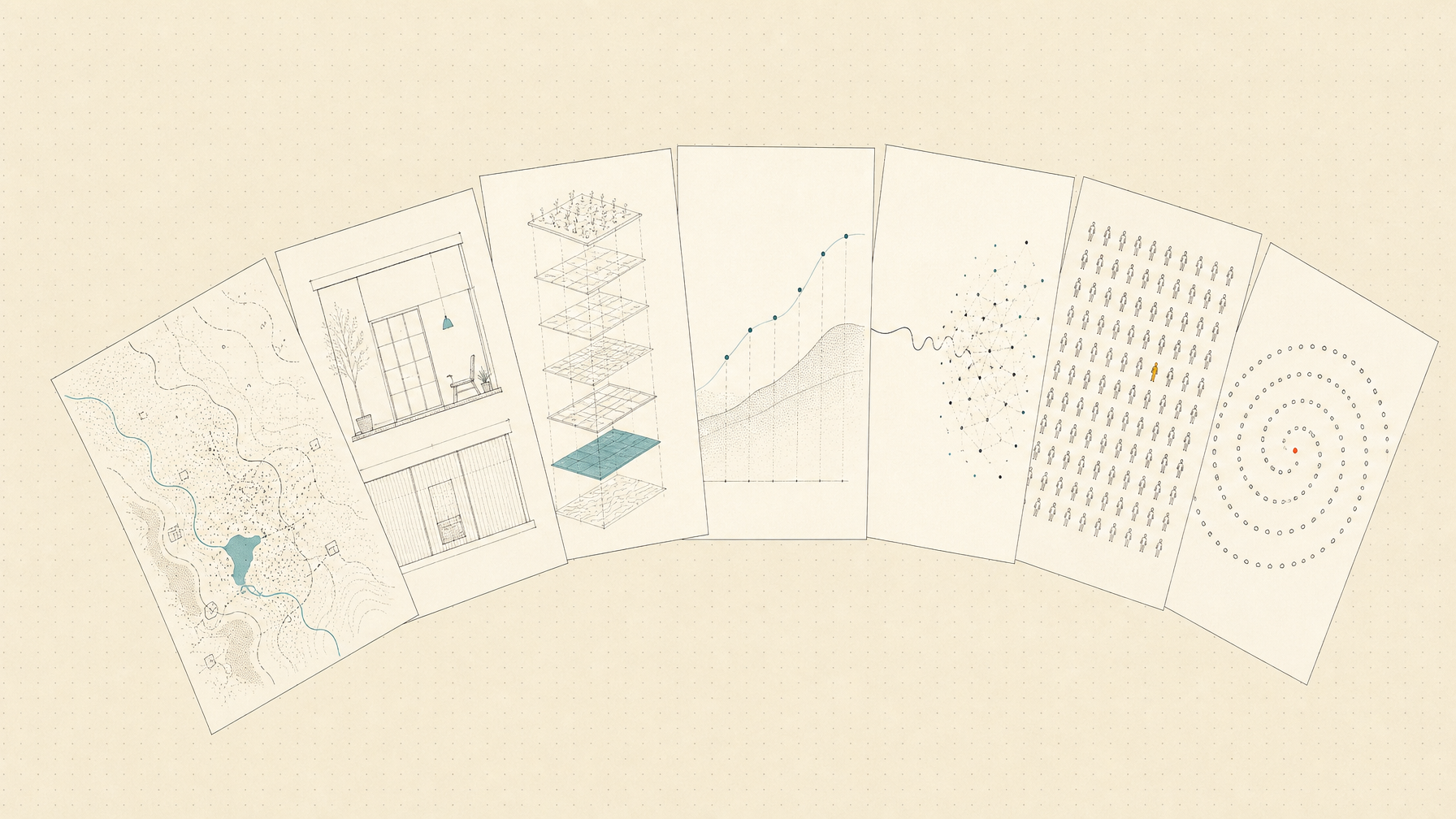
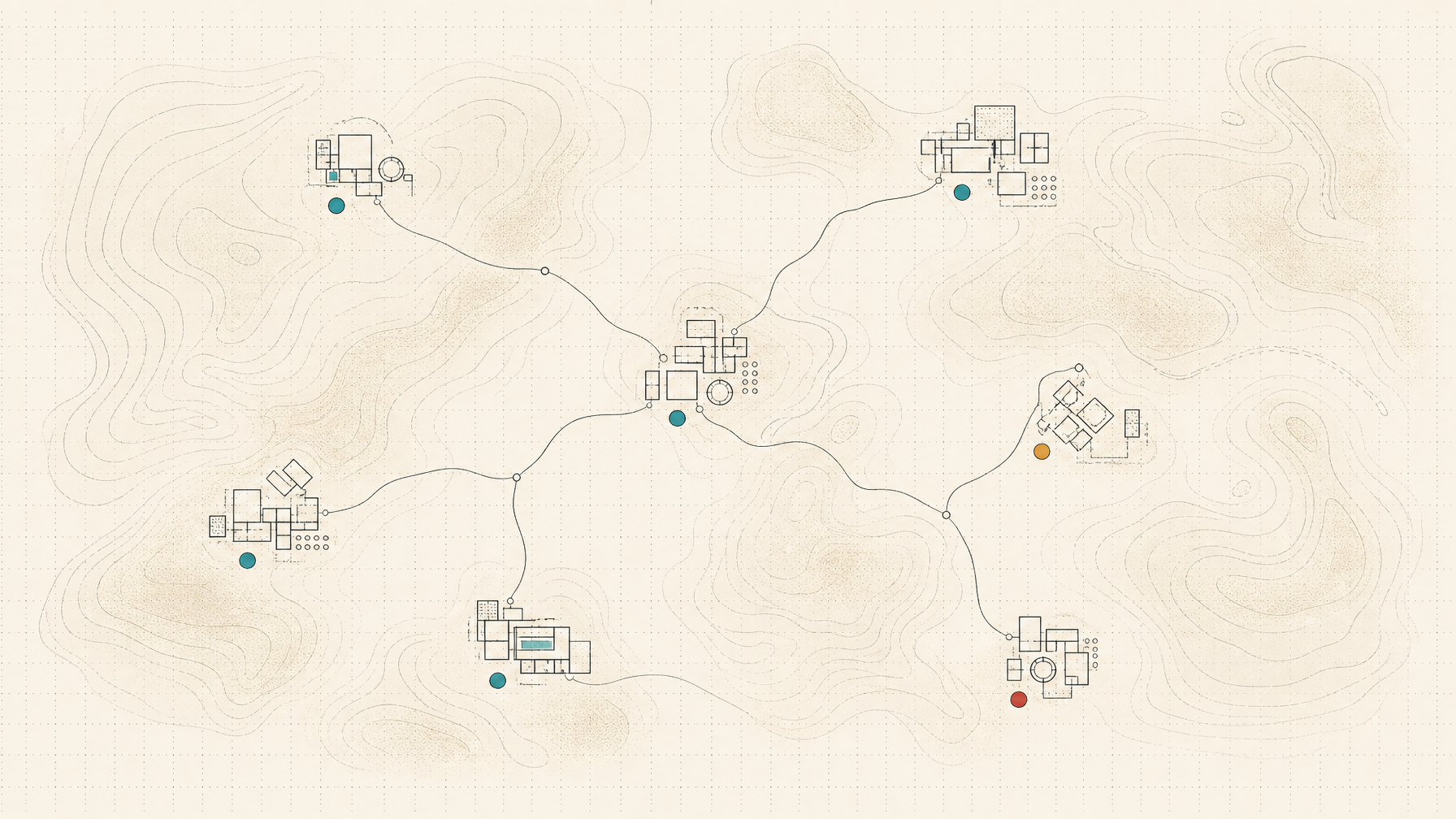
The Work OS Landscape
How the field answers “how is everything going?” — Monday to Linear to Basecamp, and the unoccupied position: portfolio as territory, not list.
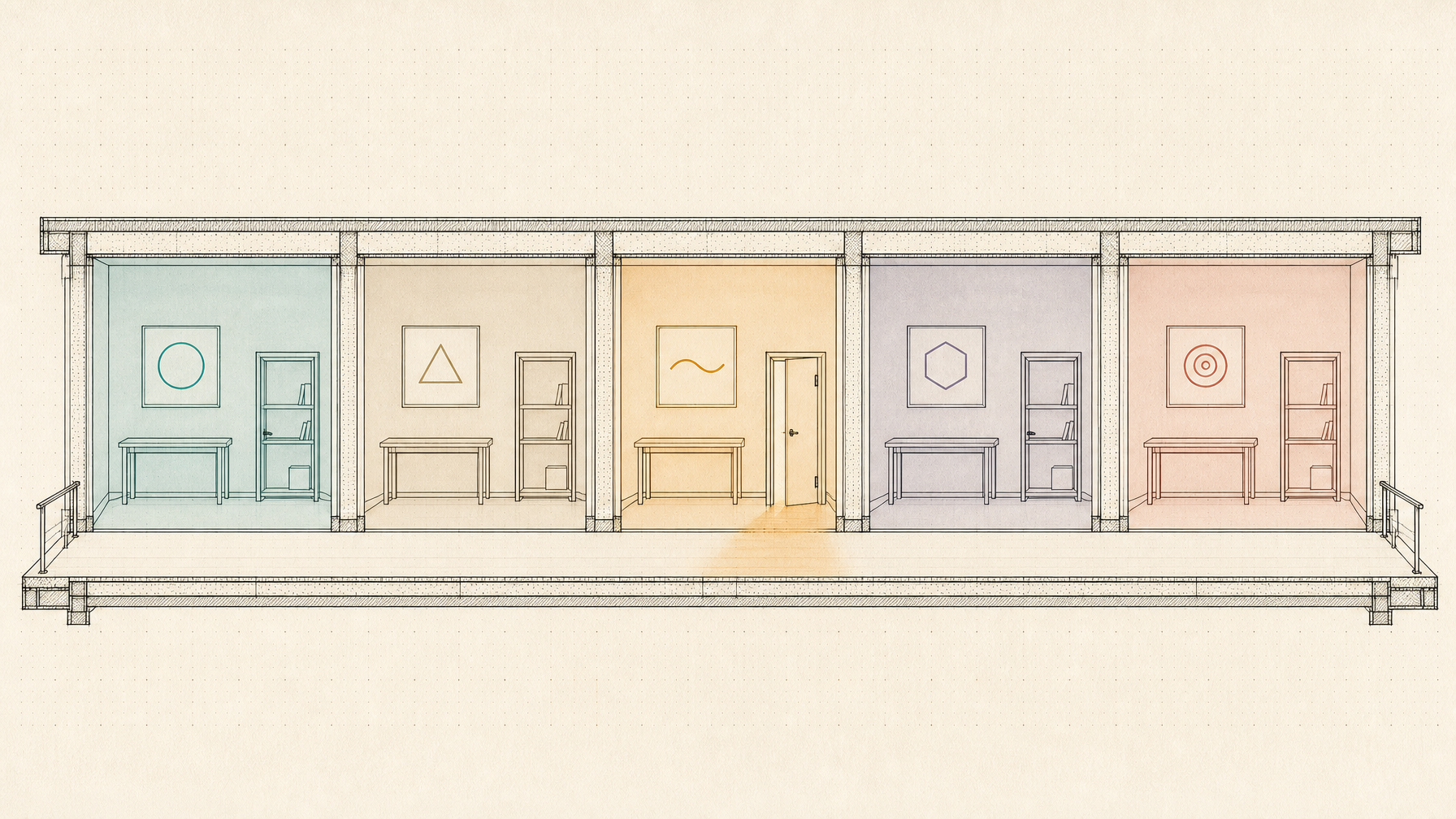
Representing Clients Visually
A client is a place you re-enter, not a record you query — brand-themed rooms, enriched identity, and the timeline as memory.
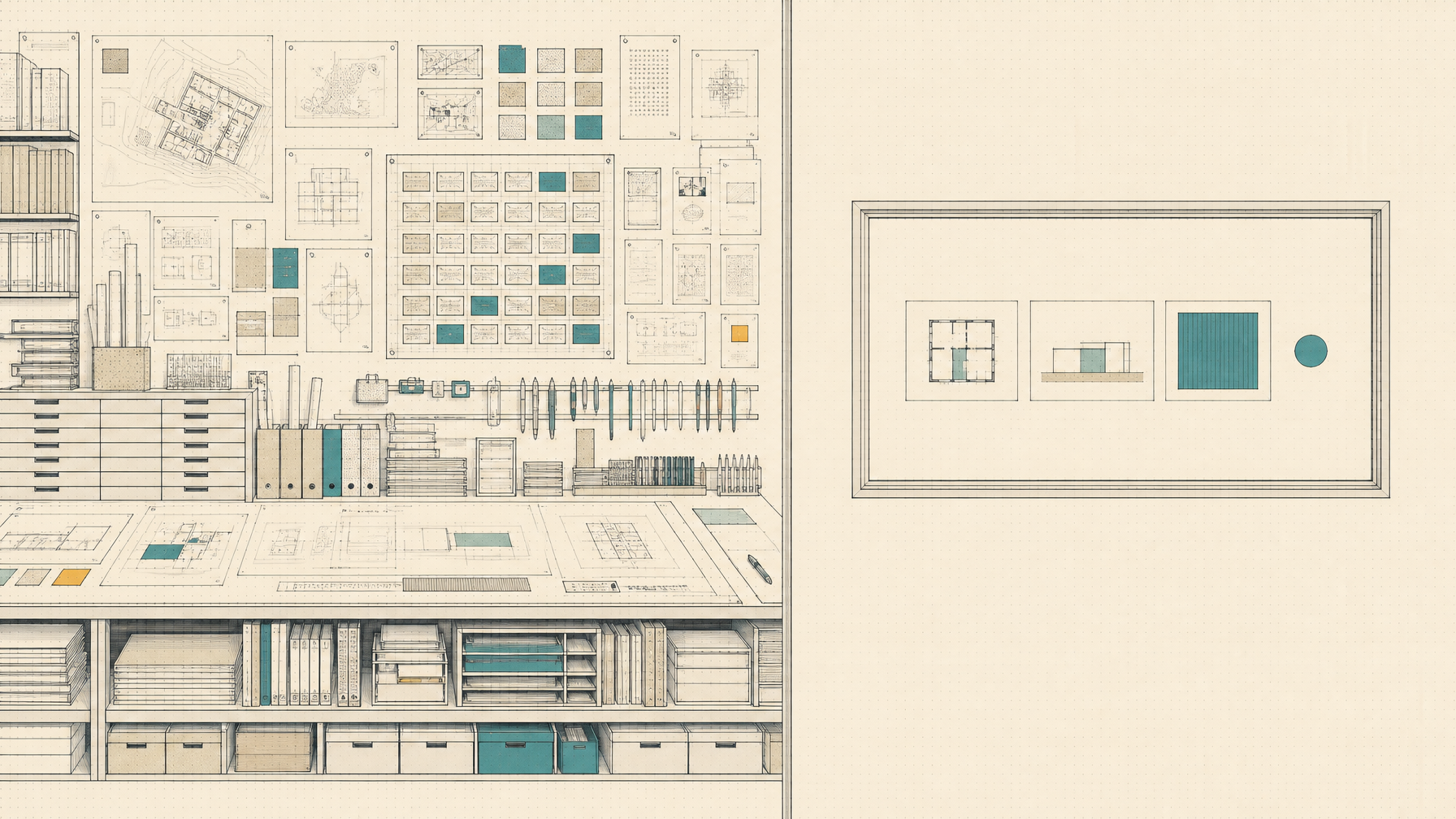
The Client Dashboard
Clients want less, not more. The publish-explicitly model, the five portal blocks, and status pages as the genre master class.
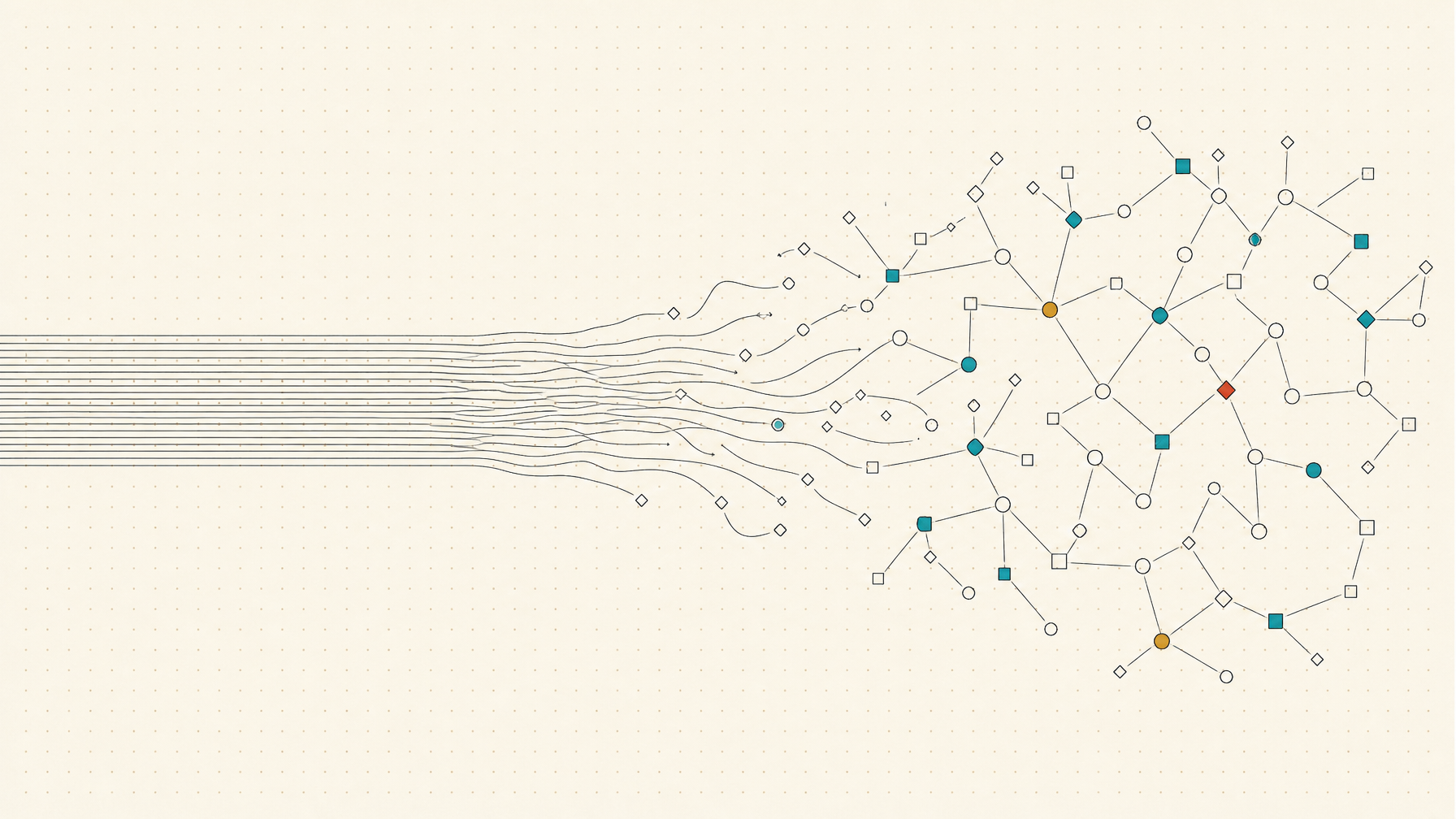
Meeting Artifacts
From flat documents to fields of connected moments — Granola's authored page, Dovetail's highlights, MeetMap's conversation graph.
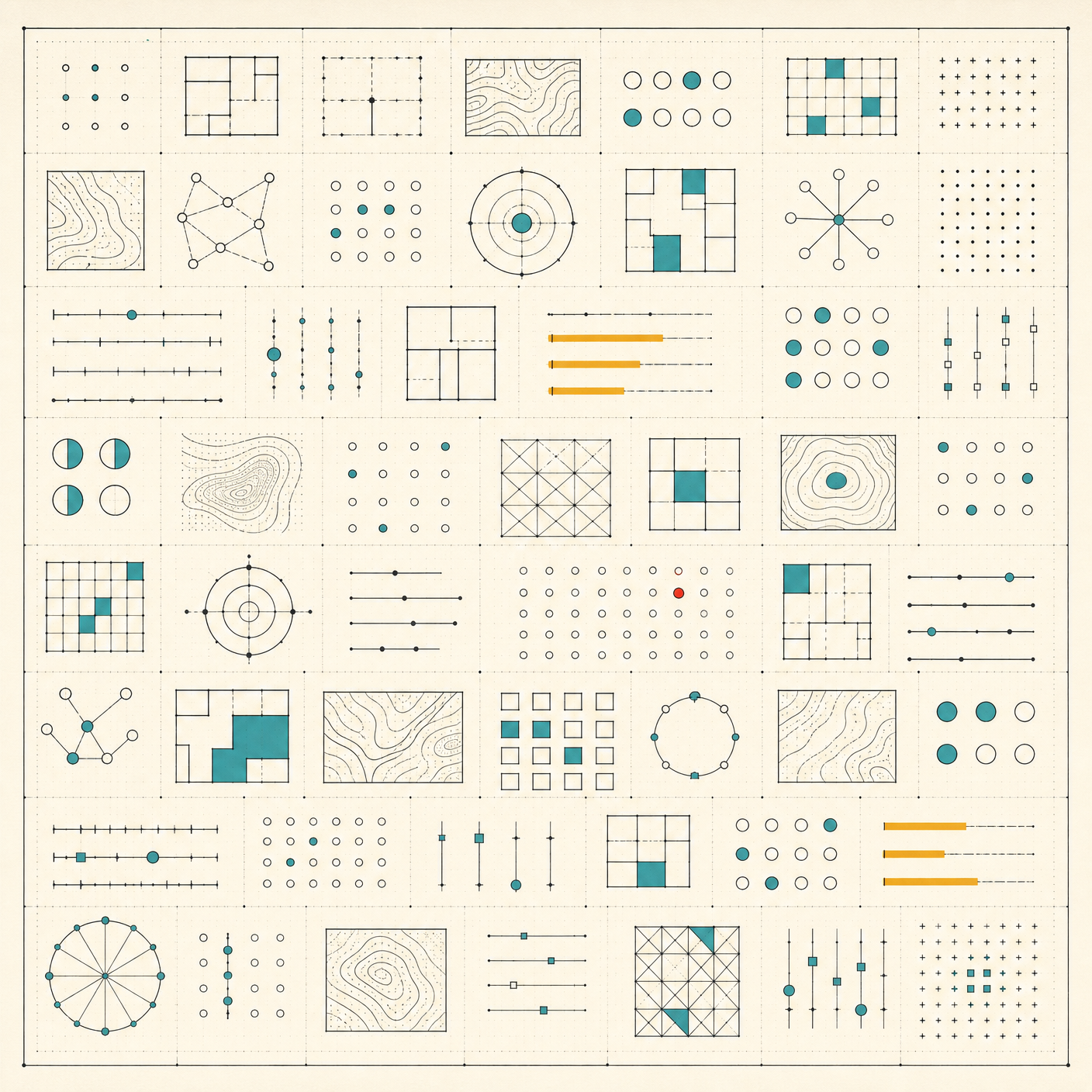
Design Trends 2026
What to adopt and what to refuse in 2026 — calm means ordered, not sparse; AI as infrastructure, not mascot.
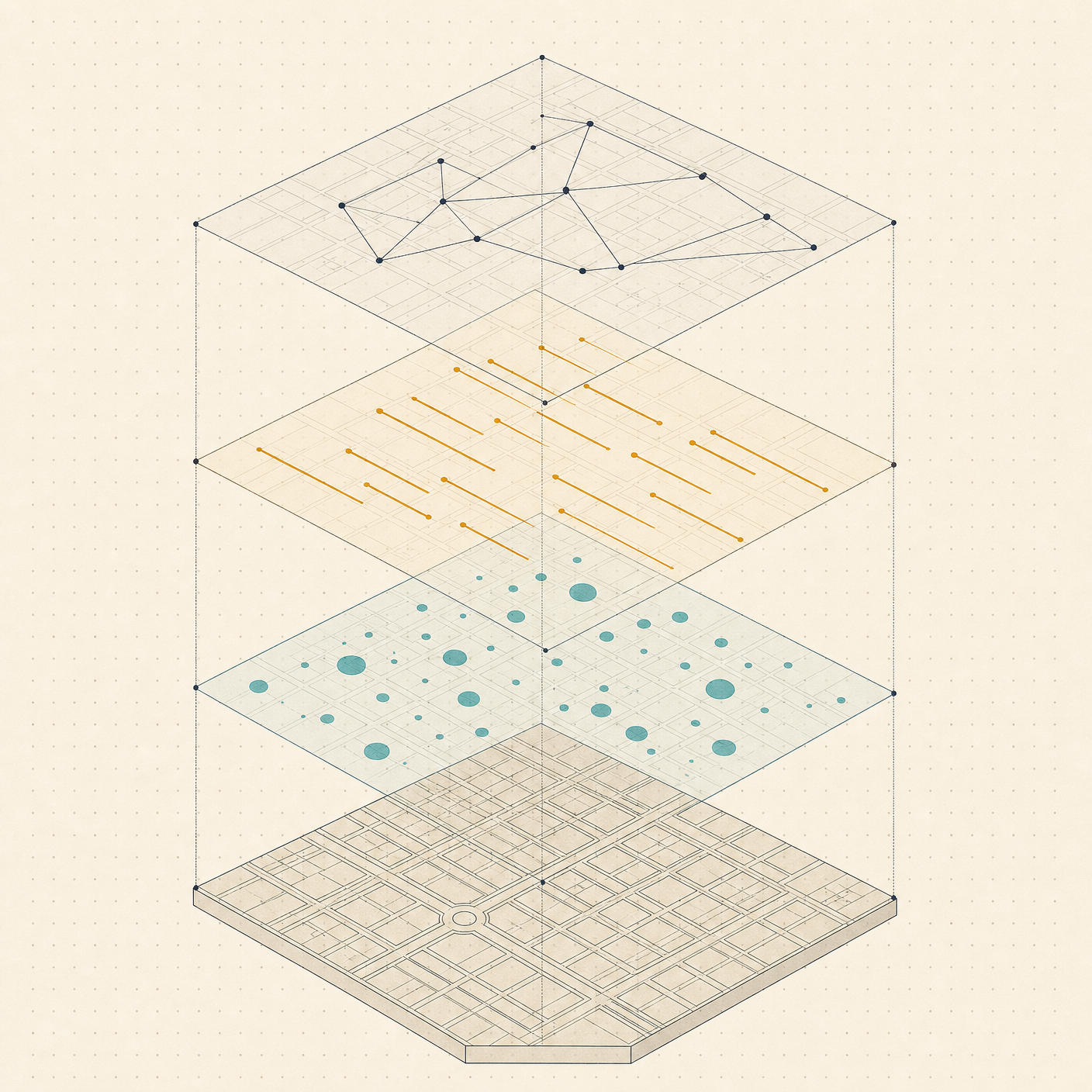
Spatial Interfaces for Work
Precedents for work-as-space — city-builder overlays, tasks on floor plans, spatial memory, and why 3D is mostly graveyards.
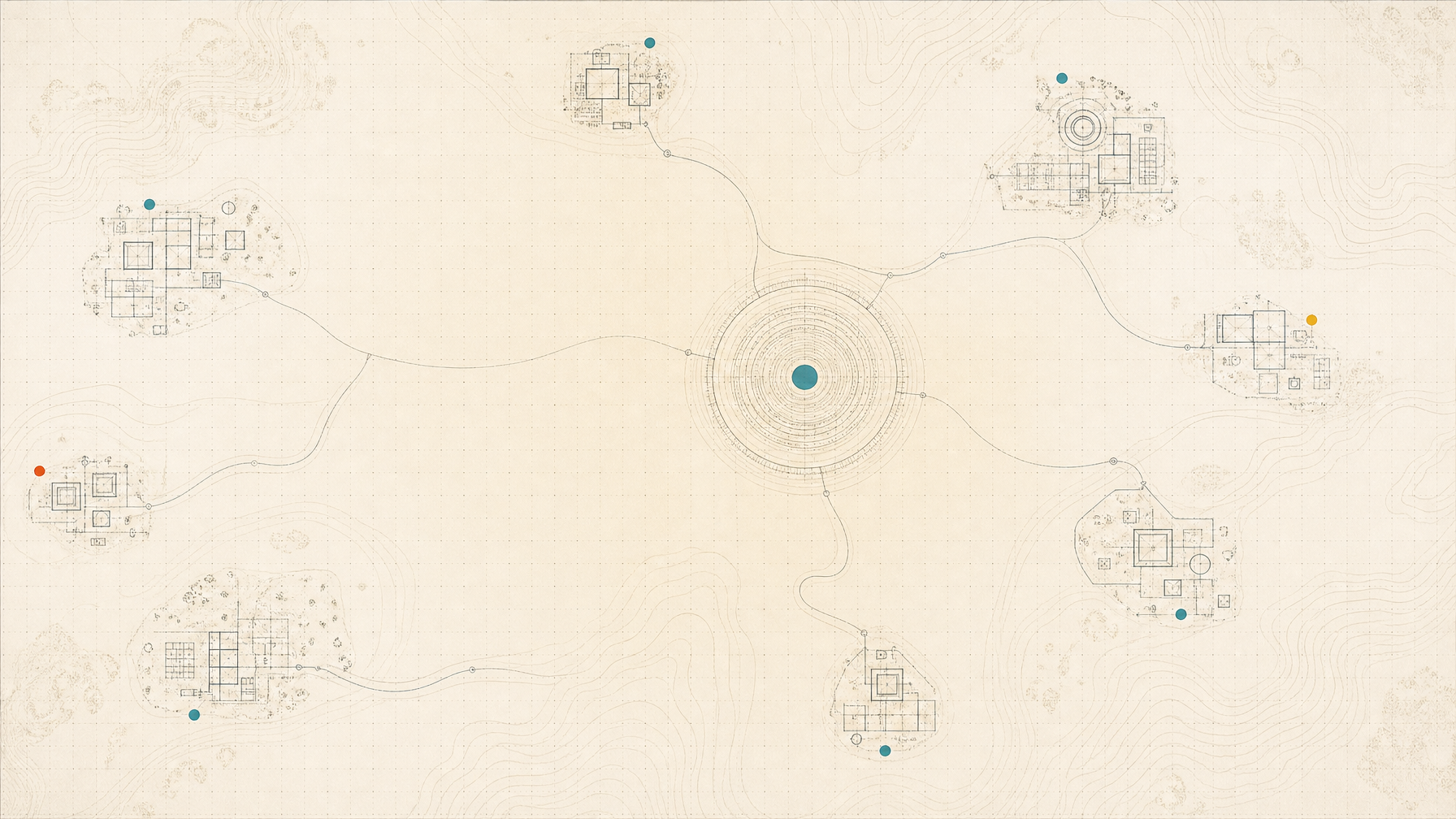
Collaboration OS Through the Pattern Language
The build read through A Digital Pattern Language — clients as centers, seven candidate patterns, and the antipatterns to refuse.
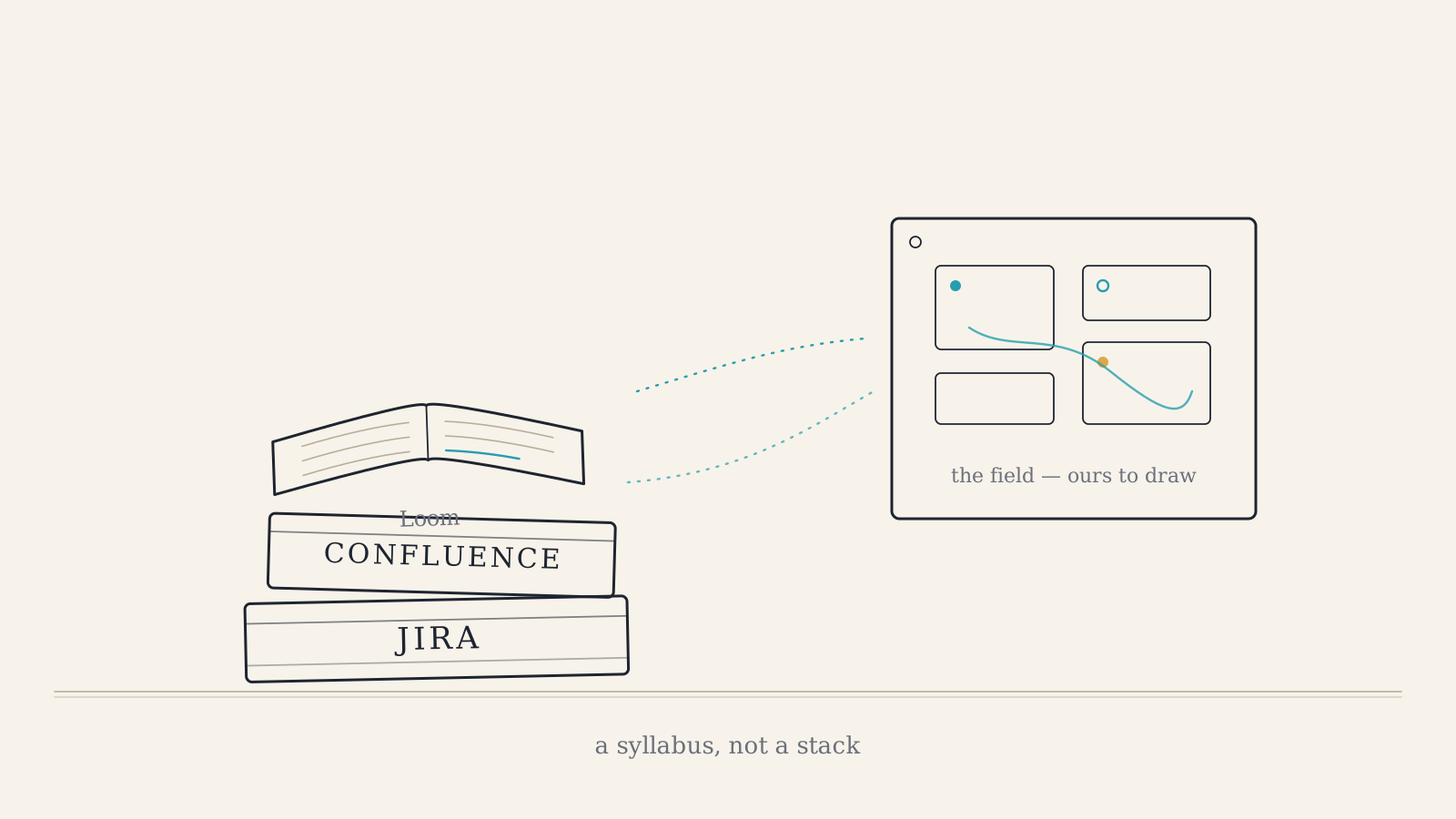
The Atlassian Question
What Loom, Confluence, and Jira teach us — and why we're still building it ourselves. A syllabus, not a stack.
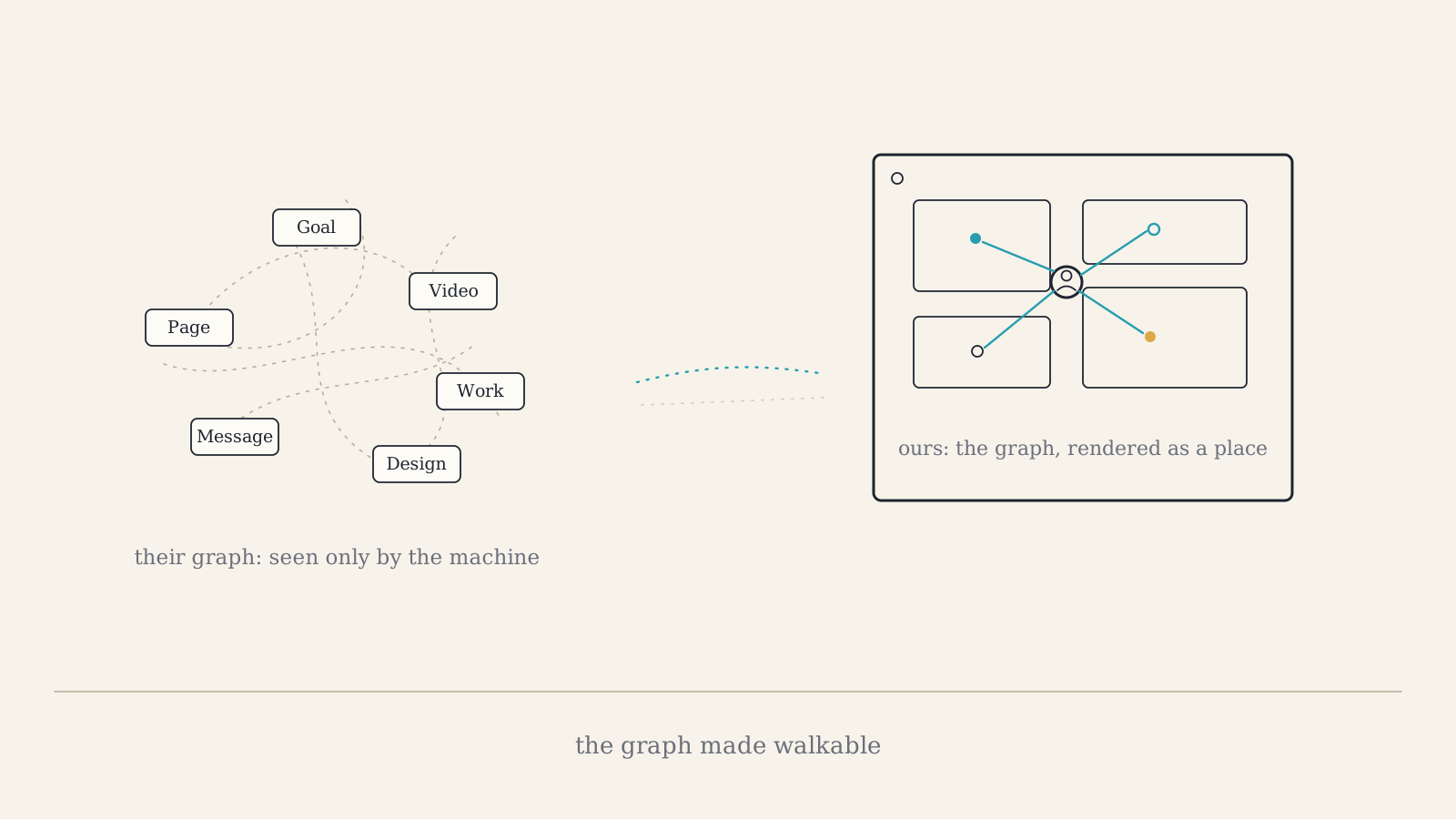
The Teamwork Graph
Their graph is invisible plumbing sold with a picture of a place. We're building the place — and the person is the node.
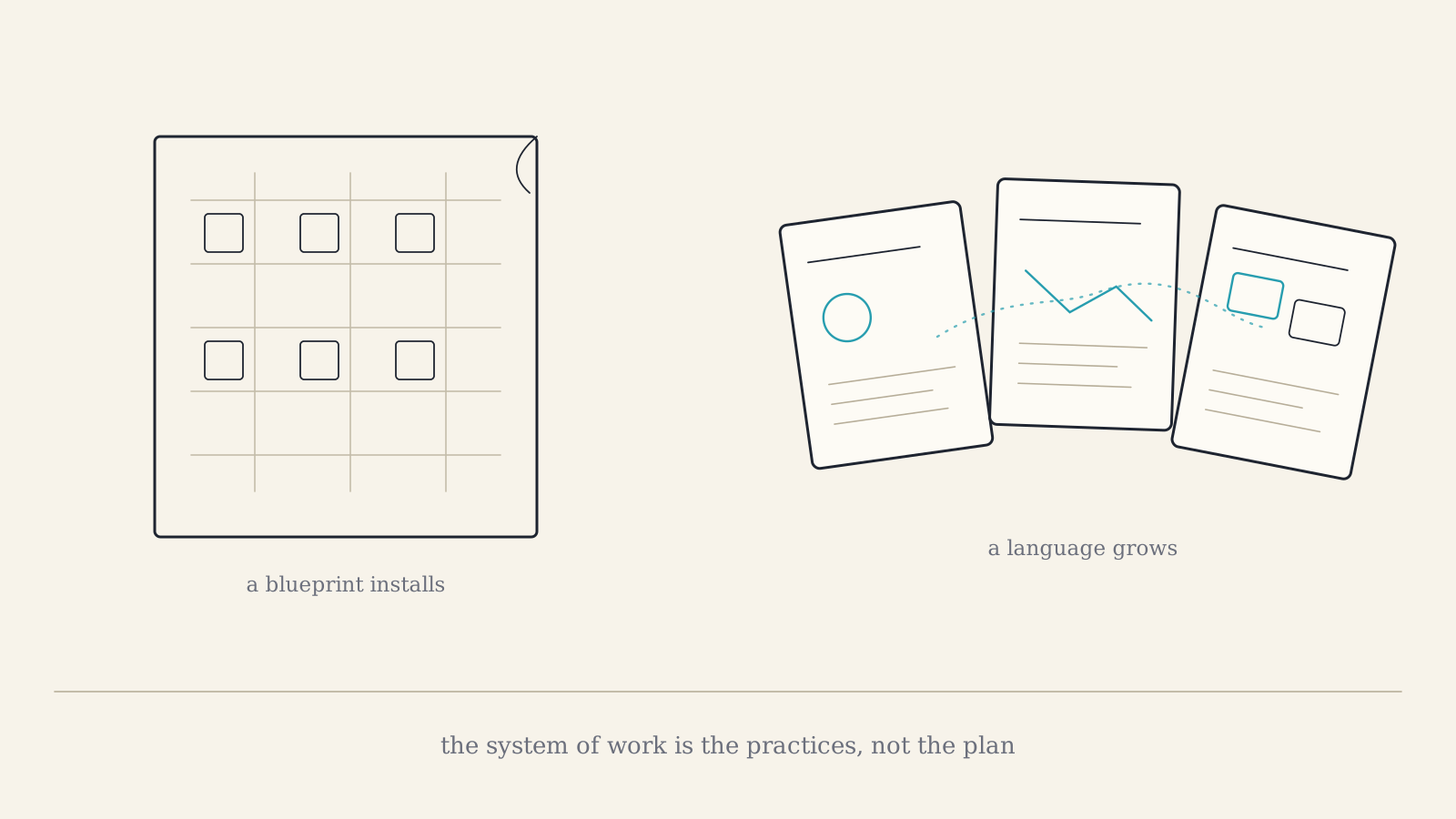
A System of Work
Doctrine with software attached. Why basic is right, blueprints vs. pattern languages, and a system of work without an org.
Threads That Run Through Everything
Human judgment over computed truth. Linear's two-sentence status, Basecamp's hand-dragged hill dot, Granola's your-notes-as-spine: the best tools put a human signal on top of machine data. Trust follows authorship.
Less, published deliberately. Clients read four data points; everything is private until promoted; the calm view is the edited view. Subtraction is the differentiator in a category defined by configuration fatigue.
Stability makes space work. Spatial memory needs user-placed, persistent positions; identity needs stable colors and rooms; status pages win through rhythm and honesty. The field must hold still so the work can move.
The gap is real. Nobody combines live synced data + spatial layout + calm human-set status. That's the position.